
Wealth Management Update November 2026
Budget 2026: More of a Fizzle Than Fireworks?
After weeks of speculation, predictions and the usual suggestions that almost everything from Pensions to ISAs might be changing, Chancellor John Healey finally delivered his first Budget on 28th October.
And, perhaps surprisingly, the biggest story wasn’t necessarily what changed, but what didn’t.
For anyone who had been worrying about their Pension Tax-Free Cash, ISA allowances, Inheritance Tax or Capital Gains Tax, there was some welcome certainty. Many of the more widely discussed potential changes simply didn’t materialise.
That’s not to say the Budget was without consequences. There were several announcements worth understanding, particularly for pensioners, savers, landlords and Business Owners, although some won’t take effect for several years.
Starting with Pensions, the full new State Pension is set to increase by 3.9% from April 2027. The Government also announced measures intended to prevent people whose only income is the full new State Pension from being drawn into paying Income Tax, with some protection extending to those with slightly higher incomes. There was also a change to the treatment of certain Pension death benefits, removing a longstanding Tax complication where payments were delayed beyond two years following a death before age 75.
For savers and property investors, the picture was a little different. From April 2027, Income Tax rates on savings interest and rental profits are set to increase by two percentage points, making the Tax efficiency of how money is held increasingly important. However, the £20,000 Cash ISA allowance remains intact, with the previously proposed reduction for those under 65 abandoned.
There was also an announcement of a new First Time Buyer ISA, expected from April 2029, designed to replace the Lifetime ISA and provide Government bonuses towards qualifying property purchases.
Business Owners will have some additional changes to consider. From April 2027, the lifetime limit for Business Asset Disposal Relief is due to fall to £500,000, while a proposed new Founders’ Relief could offer a reduced Capital Gains Tax rate for qualifying business disposals. The details and eligibility requirements will be particularly important here, especially for anyone considering selling their business in the coming years.
Meanwhile, the Government left many other familiar rules untouched, including Pension contribution allowances, Pension Tax-Free Cash, the main rates of Income Tax and National Insurance, and the existing Inheritance Tax and gifting framework. Income Tax thresholds, however, remain frozen until 2031, which means rising earnings and Pension income can still result in people paying more Tax over time, even without an increase in headline Tax rates.
And that’s perhaps one of the most important things to remember about this Budget.
Just because something hasn’t changed doesn’t necessarily mean it won’t affect your Financial Plan.
Frozen allowances, rising incomes and changes introduced gradually over several years can have a significant cumulative effect. Equally, a new Tax rule doesn’t automatically mean everyone needs to rush out and change their arrangements.
At Penguin, we believe the real value of understanding a Budget isn’t simply knowing what the Chancellor announced. It’s understanding what those announcements actually mean for your life, your family and the Financial decisions you’re making.
For some people, this Budget will create opportunities to review their plans. For others, the most sensible course may be to continue doing exactly what they were doing before.
Either way, the important thing is to make decisions based on the rules and your own circumstances, rather than the headlines that came before them.
After all, Financial Planning should be about preparing for the future, not trying to second-guess the Chancellor every October.
Inflation Is Rising Again, But What Does That Really Mean for Your Money?
Just when we were starting to feel that inflation might be settling down, the latest figures have reminded us that the cost of living isn’t quite finished causing headaches.
According to the Office for National Statistics, inflation increased to 3.5% in September, up from 3.1% in August, largely driven by higher fuel prices following continued conflict in the Middle East. With energy costs also increasing, the Bank of England expects inflation to rise further before gradually easing, potentially reaching just above 4% in early 2027.
Unsurprisingly, attention has turned to interest rates, with economists debating whether the Bank of England will need to increase the Base Rate to bring inflation back under control.
At its September meeting, the Bank held rates at 3.75%, although three of its nine policymakers voted for an increase. Whether rates rise further remains uncertain, but the decision matters to households in different ways. Higher interest rates can mean better returns for Savers, while those with Mortgages or other borrowing may face increased costs, particularly when existing fixed-rate deals come to an end.
However, there’s something about inflation that often gets overlooked.
When inflation falls, prices don’t necessarily fall with it. They usually just rise more slowly.
If something that cost £100 last year now costs £103.50, a return to 2% inflation doesn’t mean the price goes back to £100. It means that £103.50 could become approximately £105.57 the following year.
That distinction matters enormously when we’re thinking about our Financial future, particularly Retirement.
Someone planning to retire in ten years might have a clear idea of how much income they’ll need based on what life costs today. But if the cost of holidays, food, energy, insurance and everything else continues to increase, the income they’ll eventually need could look quite different.
It’s also why holding large amounts of money in Cash isn’t always as safe as it first appears. Cash has an important role in Financial Planning, particularly for emergencies and shorter-term spending, but if the interest earned doesn’t keep pace with inflation after Tax, its purchasing power can gradually reduce.
Of course, Investments come with their own risks, including the possibility of losing money, and they won’t be appropriate for every objective or timeframe. The important thing is understanding what each part of your money needs to do, rather than assuming the option that feels safest today will necessarily provide the greatest security in the future.
The Office for Budget Responsibility expects inflation to return towards the Bank of England’s 2% target by 2028. That would certainly be welcome, but forecasts are not guarantees, and even inflation at 2% means prices are generally continuing to rise.
At Penguin, we believe good Financial Planning should take account of the fact that life will probably become more expensive over time. The aim isn’t to predict every inflation figure or interest rate decision correctly, but to build a plan that considers how your spending needs may change and how your money can support them.
Because ultimately, it’s not just how much money you have that matters. It’s what that money will allow you to do in the years ahead.
When a Familiar Name Isn’t Who You Think It Is
Most of us like to think we’d recognise a scam if one landed in our inbox. A suspicious email address, a badly written message or someone claiming we’ve inherited millions from a distant relative we’ve never heard of. Surely we’d spot that?
Unfortunately, scammers have become considerably more sophisticated, and sometimes the most convincing scams are the ones that look perfectly ordinary.
We recently heard about an incident involving a client of another Financial Planning firm, who received a message from someone pretending to be a member of that firm’s team. The communication included genuine professional details belonging to the Financial Planner being impersonated, making it appear considerably more credible than the usual suspicious email.
What makes this particularly concerning is that the scammers didn’t need to hack into the firm’s systems or obtain confidential information to create the impression of legitimacy. They simply used information that was already publicly available.
Financial Planners and other regulated professionals have their names and registration details published on the Financial Conduct Authority (FCA) Register. This is an important resource designed to help consumers check whether a firm or individual is authorised, but criminals can also copy those details and use them to impersonate someone genuine.
By including a real name, professional information and a Firm Reference Number, an email can appear convincing, even when the person sending it has absolutely no connection to the business they’re claiming to represent.
And that’s the important lesson here.
Just because the information in an email is genuine doesn’t mean the person sending it is.
Scammers are increasingly relying on trust rather than simply trying to create panic. They know that if a message appears to come from someone you recognise, particularly a professional you already have a relationship with, you’re naturally more likely to read it and potentially act on it.
That’s why it’s worth taking a moment to look beyond the name displayed at the top of an email. Check the actual email address, particularly if it comes from an unfamiliar domain or a personal Gmail account. Be especially cautious if you’re being asked to transfer money, share personal information, follow an unexpected link or make a decision urgently.
If you’re unsure, the safest approach is to contact the organisation directly using a telephone number or email address you already know is genuine. The FCA’s Firm Checker can also help you verify an authorised firm’s details, although a registration number appearing in a message should never be treated as proof of who sent it.
At Penguin, we would much rather receive a hundred telephone calls from clients asking, “Is this really you?” than have one person lose money because they felt awkward about checking.
There is absolutely nothing embarrassing about questioning a message, even when it appears to come from someone you know. In fact, we’d actively encourage it.
And please consider sharing this reminder with your family and friends, particularly anyone who might be less familiar with the increasingly convincing ways fraudsters operate.
The best protection against a convincing scam is often a very simple habit: before you trust the message, check the messenger.
Higher Savings Rates Are Welcome, But Are You Looking Beyond the Headline?
For anyone who remembers the days when getting 1% interest on their savings felt like a result, the latest rates being offered by National Savings & Investments (NS&I) might come as a pleasant surprise.
NS&I has increased the interest rates on its British Savings Bonds for the third time since July, with rates now ranging from 4.99% to 5.17%, depending on how long you’re prepared to lock your money away.
From 6th October, the one-year Guaranteed Growth Bond pays 4.99%, rising to 5.07% over two years, 5.10% over three years and 5.17% over five years. Guaranteed Income Bonds offer equivalent Annual Equivalent Rates (AERs), with interest paid monthly rather than accumulated until maturity.
Those are certainly attractive headline figures, particularly when compared with the savings rates available just a few years ago. NS&I also has the added reassurance of being backed by HM Treasury, meaning money held in its products benefits from Government security.
But whenever we see savings rates increasing, there’s a question we think is worth asking.
Is getting the highest interest rate actually the most important thing for this money?
It’s tempting to assume that an account paying 5.17% must automatically be better than one paying 4.99%. However, the difference between those rates is £180 a year on £100,000 before Tax, assuming the rates apply for a full year. That might be worthwhile, but not necessarily if it means committing money for five years when you could need it considerably sooner.
And then there’s Tax.
Interest earned on most savings accounts and NS&I British Savings Bonds is potentially subject to Income Tax, depending on your circumstances and available allowances. With higher rates of Tax on savings income announced from April 2027, the amount you actually keep could become an increasingly important consideration.
For some people, that may mean looking at how Cash ISAs fit into their overall Financial Plan. For others, particularly those paying higher rates of Tax, it may be worth considering alternatives such as certain UK Government Bonds, known as Gilts, where the Tax treatment can be different.
Gilts can offer potential Tax advantages because gains on most conventional UK Government Gilts are exempt from Capital Gains Tax, although coupon interest is generally taxable. Their suitability depends on the price paid, the income they provide, when they mature and whether you might need to sell before maturity. They aren’t simply interchangeable with a savings account.
Of course, Cash itself remains an important part of Financial Planning. Having money readily available for emergencies, planned spending or simply peace of mind is valuable, and not every pound needs to be invested for long-term growth.
The important thing is making sure your money is doing the job you need it to do.
At Penguin, we believe the conversation should start with what the money is for, when you’ll need it and how it fits into your wider Financial Plan. Only then does it make sense to decide which account, Investment or savings product might be appropriate.
Because while an extra fraction of a percentage point in interest is always welcome, getting the right balance between return, security, access and Tax efficiency is often worth considerably more than chasing the highest rate on the market.
You’ve Got a Will, a Trust and an LPA. But Do They Actually Work Together?
One of the most reassuring feelings in Financial Planning is knowing you’ve got your affairs in order. Your Will is written, your Lasting Powers of Attorney (LPAs) are registered, and perhaps you’ve even established Trusts to help protect your family’s wealth for future generations.
Everything is sorted. Or at least, that’s what you’d hope.
Unfortunately, there’s an important detail that many people don’t realise. Just because you’ve put all the right legal documents in place doesn’t necessarily mean they’ll automatically work together when your family needs them most.
A good example is the relationship between LPAs and Trusts.
A Property and Financial Affairs LPA allows someone you trust to make certain Financial decisions on your behalf if you’re no longer able to do so yourself. That might include managing your bank accounts, paying bills, dealing with Investments or making decisions about property.
However, if you’re also a Trustee of a family Trust, your attorney generally cannot simply take over your responsibilities as Trustee if you lose mental capacity.
This can create an unexpected problem, particularly where a Trust has been established to protect wealth for children, grandchildren or other family members. Trustees will often need to make decisions together, and if one Trustee can no longer participate, the administration of the Trust could become difficult until a suitable replacement is appointed.
Depending on the wording of the Trust deed and the circumstances involved, replacing a Trustee may be relatively straightforward or could require additional legal steps, potentially including an application to the Court of Protection.
It’s not necessarily a problem with the Trust or the LPA individually. The problem is that nobody has considered how they need to work together.
There is another important consideration when it comes to making gifts.
Many families understandably want to pass wealth down through the generations, whether that’s helping children onto the property ladder, supporting grandchildren or reducing a potential Inheritance Tax liability.
But if someone loses mental capacity before those plans have been carried out, their attorney’s ability to make substantial gifts or establish Trusts on their behalf is generally very limited. Anything beyond the restricted gifting powers permitted by law will usually require approval from the Court of Protection, which considers whether the proposed arrangement is in the person’s best interests.
This can make Estate Planning considerably more complicated, particularly where families have assumed that an attorney will simply be able to continue with plans discussed years earlier.
For Business Owners, there can be further considerations around Business Property Relief and the changing rules governing how qualifying business assets are treated for Inheritance Tax purposes. These are areas where early planning, appropriate legal arrangements and regular reviews can make a meaningful difference.
Of course, none of this means that Trusts or LPAs are ineffective. Quite the opposite. Both can be extremely valuable parts of a well-structured Financial and Estate Plan.
The important thing is recognising that they each have different jobs to do.
A Will determines how your Estate should be dealt with after your death. An LPA allows trusted individuals to make certain decisions during your lifetime if you’re unable to make them yourself. Trusts can help control how assets are held, managed and passed on, potentially providing additional protection for the people you care about.
But those arrangements need to complement one another, rather than simply exist as separate documents in a folder.
At Penguin, we believe Estate Planning should be about much more than making sure the paperwork has been signed. It’s about understanding what you want to happen, who will be responsible for making it happen and whether the arrangements you’ve put in place will work when they’re actually needed.
That means reviewing Wills, Trusts, LPAs and Trustee appointments together, particularly following changes in family circumstances, legislation or your Financial position.
Because ultimately, the best Estate Plan isn’t simply one that looks good on paper. It’s one that works for your family when life doesn’t go according to plan.
Top Three Cash ISAs
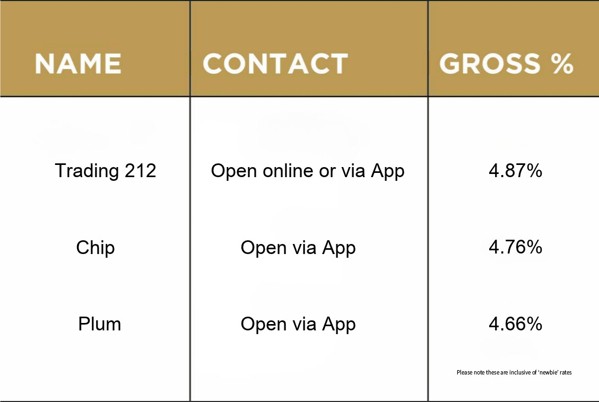
Please check the terms and conditions before opening any account. If in doubt, consult with your financial adviser directly, as the above is for your information only.
Source: Moneysavingexpert.com 02/11/2026